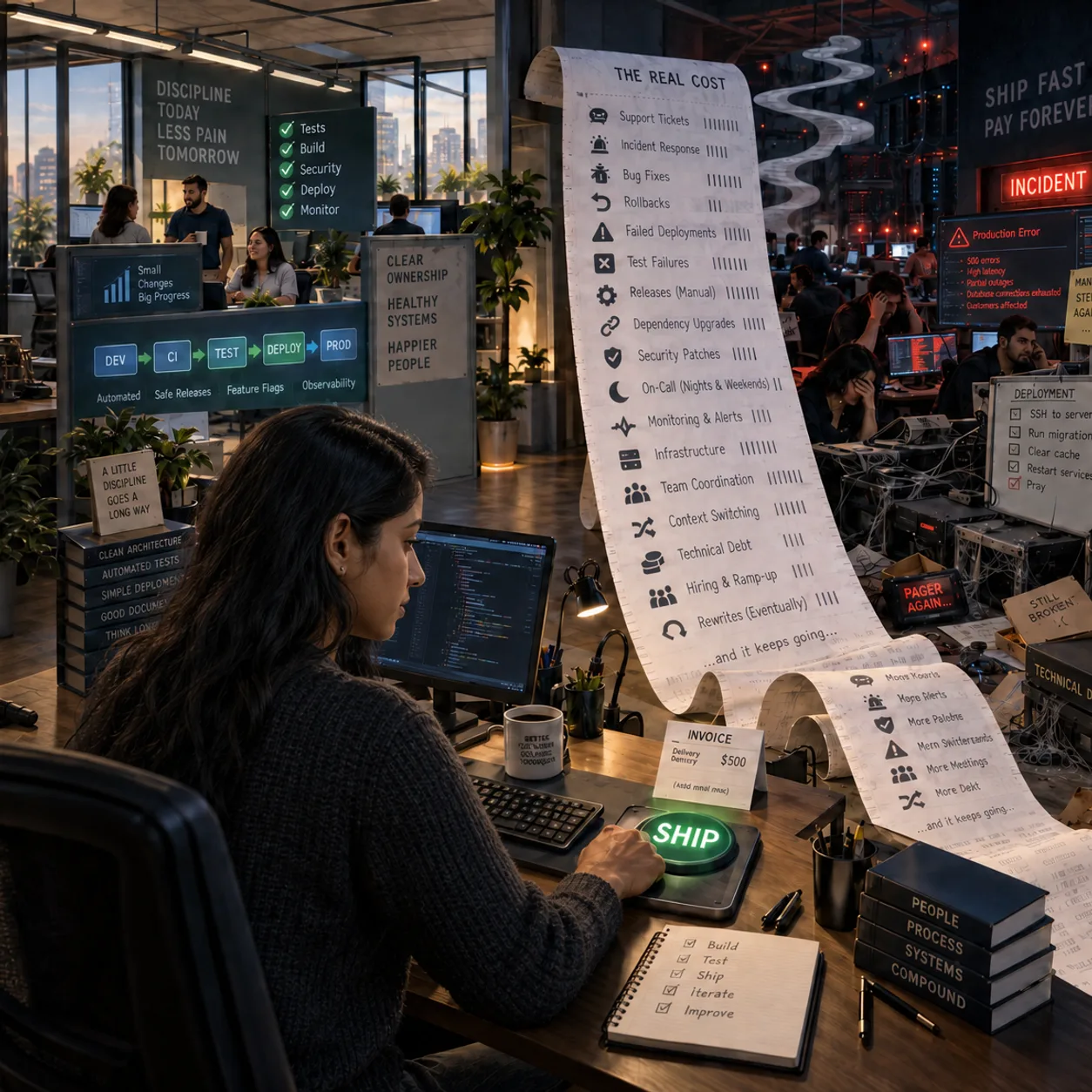
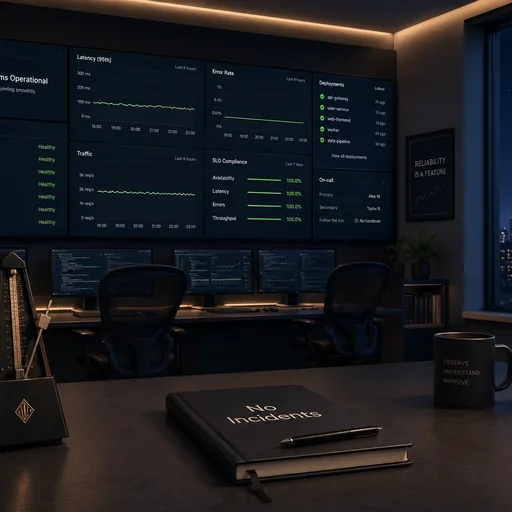
The demo worked, the team hit the date, and everyone felt good for about thirty minutes. Then the support tickets started. Boring software can be as clever as you like to build. The part that should be boring is running it in production, with practiced rollbacks, clear ownership, and nobody relying on heroics to get through the week.

The blog as of 1377668
A cumulative snapshot of every article published up to Boring Software on June 15, 2026. 4 articles. View the current list →
I started writing software before source control was a given, back when you found out who changed a file by asking around. Git made creating branches cheap, but it never made integrating them cheap. Long-running branches feel productive to the developer who opens them, while the cost lands on everyone else as delayed integration and uncertainty that surfaces right before a release. Trunk-based development is where you end up once you take CI/CD seriously.
Somewhere in most codebases there is a clever abstraction that saved three days of development and has been collecting interest ever since. Cost-adjusted software engineering judges work by the value it creates against the full cost of building and operating it. You can pay up front through testing, CI/CD, and clear ownership, or pay forever through incidents and rework.
Every software system exists twice: once as what the team believes it built, and once as what shows up after it ships. This blog lives in the gap between the two, writing about ownership, deployment, operations, and the people underneath, starting from the idea that most architecture problems are ownership problems.