
AI made execution dramatically faster, but most teams are not bottlenecked on execution. They are bottlenecked on planning and validation, and AI does little for either by default. Speeding up the middle of the delivery system just backs the work up at review, testing, and deployment. The fix is to improve the whole loop, from intent to plan to change to safe production, not only the part that writes the code.
Delivery5 articles
Once a defect is in production, the customer should not become part of your debugging environment. Triage that feels like progress, more logs, another build, "we think we're close," often just means the customer keeps absorbing the failure while engineering looks for certainty. The mature move is to stop the bleeding first, then diagnose.
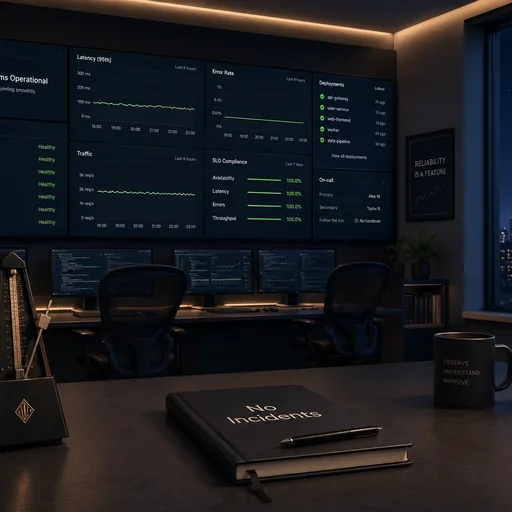
Boring software is not dull to build, it is uneventful to operate. The thing you ship can be clever and satisfying, but running it in production should be routine: practiced rollbacks, clear ownership, and no reliance on heroics. That kind of boring is engineered, not accidental.
Long-running branches feel productive for the developer who opens them, but the cost lands on everyone else through delayed integration, hidden assumptions, and uncertainty that surfaces right before a release. Trunk-based development is less a trend than the natural consequence of taking CI/CD seriously.
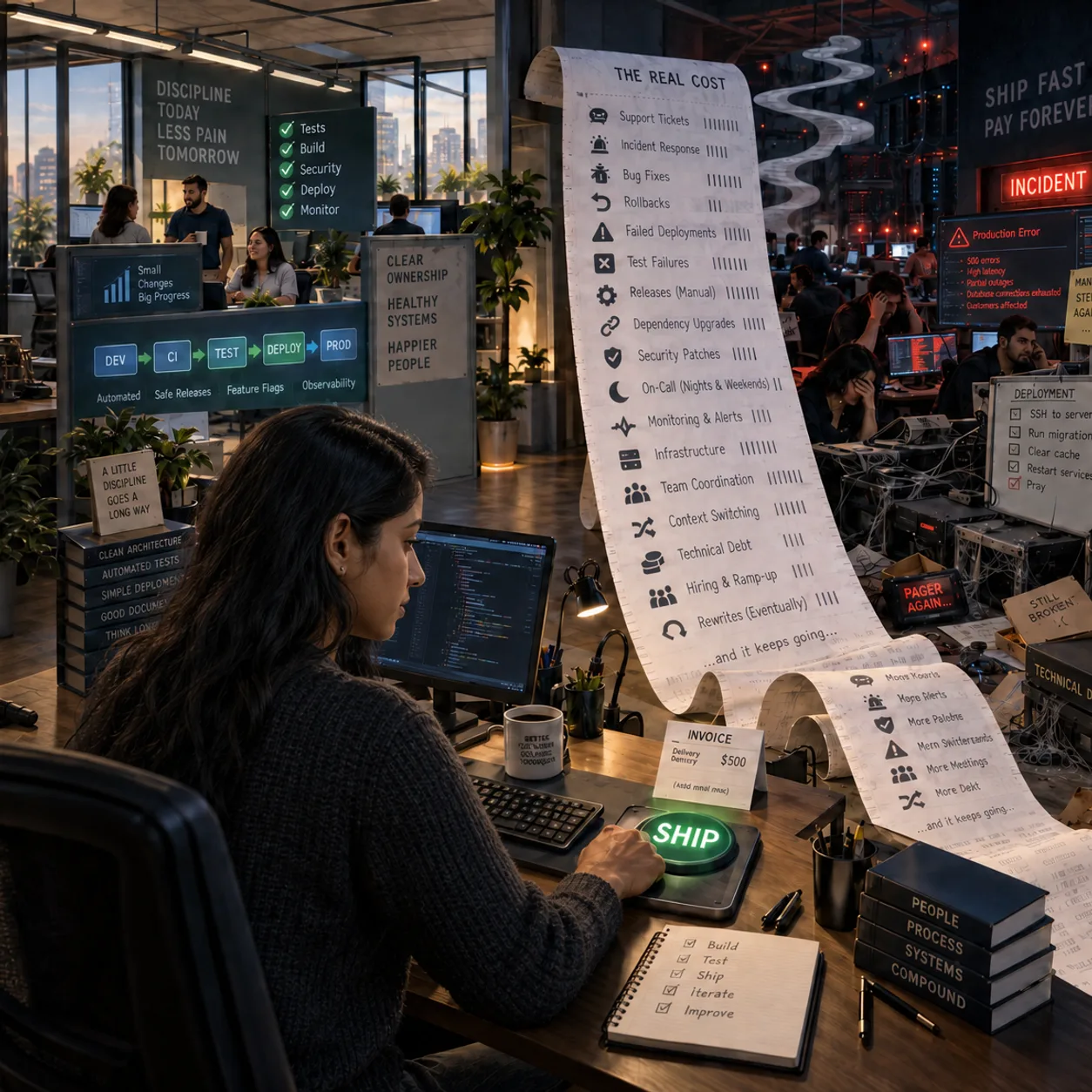
Cost-adjusted software engineering judges work by the value it creates against the full cost of building and operating it, not just whether it shipped. You can pay up front through testing, CI/CD, and clear ownership, or pay forever through incidents and rework.