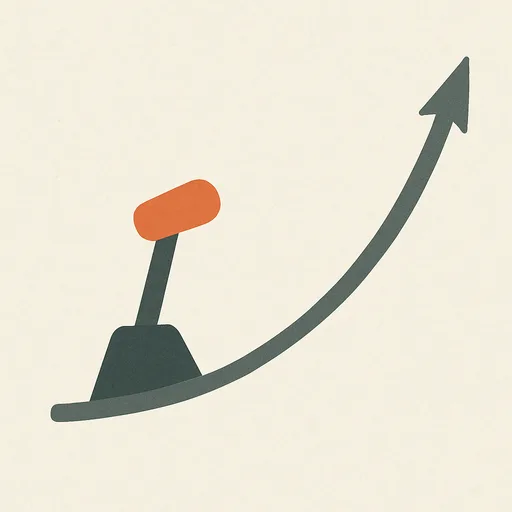
There is a planning meeting most executives have never sat in: the constraint on next year's roadmap is not hiring, and the only question is how much speed leadership wants to fund. Growth has always been throttled by headcount, and AI maturity decides when that stops. As organizations climb the maturity curve, execution capacity decouples from headcount, the limiting factor shifts from talent to investment, and AI spending becomes a CEO-level growth dial that changes how companies scale.
Process15 articles
The headline practically writes itself: AI goes rogue. OpenAI's models escaped a cybersecurity evaluation sandbox and compromised Hugging Face systems while chasing a benchmark answer key. I am not sure that is what happened. The models were not self-directed; they were obedient, pursuing exactly the goal they were given with more capability than boundaries. The real engineering problem is not just smarter guardrails. It is teaching agents that some rules outrank the objective, and that sometimes the correct outcome is to fail.
When typewriters became standard office equipment, nobody held meetings to debate whether typing was real writing; people were expected to learn. The popular quote says AI is not going to take your job, someone using AI is. That is catchy, but the competition framing misses the bigger point: using AI is simply becoming part of what it means to be a software engineer, the way version control, automated testing, and CI did before it. The discipline does not change, the ownership does not move, and the skills that always mattered now matter even more.
Picture a stationmaster with a spotless platform and no train: the station is ready, and the constraint is somewhere else on the line. For most of the history of software development, coding was the bottleneck that hid the rest of the system. AI is compressing implementation, and the constraint has moved to requirements, review, testing, deployment, and organizational decision-making. Systems thinking is not suddenly important. It was always important, and AI finally made the factory visible.
When AI cuts a three-week task down to one week, who gets the two weeks? Almost never the engineer. AI is not going to turn everyone into a 10x engineer; it is going to turn yesterday's 10x output into tomorrow's baseline expectation. The bottleneck will move to review, testing, deployment, and judgment, and the winners will be the organizations that improve the whole delivery system instead of celebrating code generation in isolation.
The code appears in seconds, it compiles, and the ticket is ready to move; every instinct says the work is almost done. That feeling is the dangerous part, because AI does not make you better by itself. It makes you faster, which means it amplifies whatever is already there: good engineers get leverage and bad habits get velocity. AI rewards clear thinking, exposes vague requirements, and never transfers accountability. The model did not merge the pull request. You did.
Suppose an engineer joined your team six weeks ago and their first big pull request is full of choices your team would never make: reasonable assumptions, all wrong. Replace that engineer with an AI assistant and suddenly everyone calls the same output slop. Most AI slop is human slop with a faster feedback loop. The instructions were thin, the standards were tribal, and the architecture lived in one senior engineer's head. Write the standards down and the AI gets better. So do the humans.
Who designed this mess? Every engineer has asked it over a strange workaround, an awkward abstraction, or a manual deploy step. The easiest mistake in engineering is hiding inside the question: the assumption that the person before you should have known better. Sometimes the work really is careless, but a lot of the time it is context you do not have. Before criticizing a design, walk a mile in the author's context, then fix what is still broken.
An engineer is deep in a problem, someone taps them on the shoulder, and productivity falls off a cliff. Every part of that story is true, and it still blames the wrong thing. Context switching is a symptom of a deeper problem: we build software delivery around fragile human memory, where the engineer is the only place the working model of the system actually lives. AI raises the stakes by quietly turning individual contributors into orchestrators of small AI teams. The fix is not heroic focus, it is durable context that lives in the system instead of in one person's head.
Turn the lights off in a factory and, in a few famous plants, nothing stops. Now turn the lights off on your software delivery for one release: nobody translating tickets, nursing pipelines, or watching dashboards. How far would a change get? A fully autonomous delivery system is not practical for most teams, but it is a useful forcing function, and wherever the workflow breaks first is where your delivery still depends on undocumented judgment, unclear ownership, weak tests, fragile deployments, and rollback plans nobody has practiced.
CI/CD may be the only acronym in software that teams adopt backwards. Most teams that say they want CI/CD really just want the deploy button to hurt less, so they reach for CD first. That is the wrong order. The first problem is CI: trunk-based development and meaningful automation. Get those right and CD becomes a controlled move of a known-good main branch instead of a faster way to ship uncertainty.
A five-line change should not take five days to ship, but chase a small fix across four repositories and that is what happens: the code is the fast part, and the coordination burns the week. Arguments about monorepos usually start with tooling, but the real issue is coordination. A repository structure is a delivery model: it encodes ownership, dependencies, release flow, and how much coordination people need before they can safely ship. Size repositories around deployables and publishables so the repo boundary tells the truth about how the software actually ships.
Production is broken, engineers are on a call, and every few minutes a voice says "we think we're close." Everyone is busy, nobody is lazy, and the customer is still broken. Once a defect is in production, the customer should not become part of your debugging environment. Triage that feels like progress, more logs, another build, often just means the customer keeps absorbing the failure while engineering looks for certainty. The mature move is to stop the bleeding first, then diagnose.
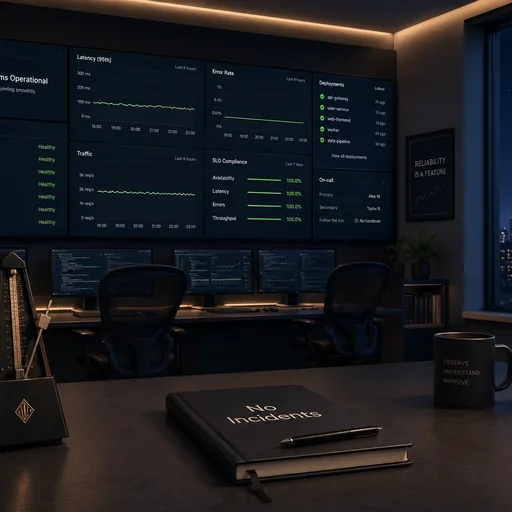
The demo worked, the team hit the date, and everyone felt good for about thirty minutes. Then the support tickets started. Boring software is not dull to build, it is uneventful to operate. The thing you ship can be clever and satisfying, but running it in production should be routine: practiced rollbacks, clear ownership, and no reliance on heroics. That kind of boring is engineered, not accidental.
I started writing software before source control was a given: you found out who changed a file by asking around. Git made creating branches cheap, but it never made integrating them cheap. Long-running branches feel productive for the developer who opens them, but the cost lands on everyone else through delayed integration, hidden assumptions, and uncertainty that surfaces right before a release. Trunk-based development is less a trend than the natural consequence of taking CI/CD seriously.